


Break Free From Fear: Why We're Scared of Change and How to Fix It
- aryaforyoga
- Nov 23, 2025
- 4 min read

What if I make the wrong choice? Have you ever heard this voice in your head, or come across this thought and then fuelled it with more limiting thoughts until you talked yourself out of ever finding out the truth?
Change terrifies us—even when we desperately want it. We stay in unfulfilling situations and do not step out of our limiting beliefs because the familiar, however uncomfortable, feels safer than the unknown.
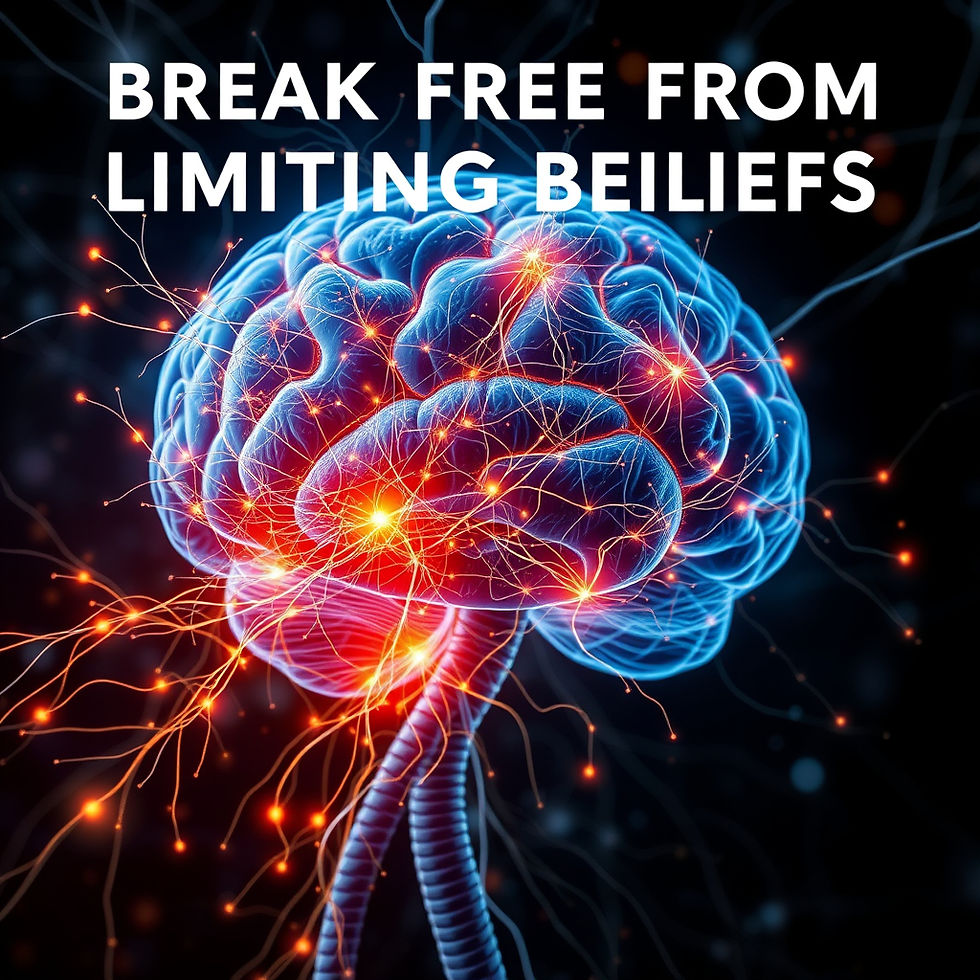
But, once we stop and look at it, simply by bringing our awareness to the situation and questioning why or what if and then deciding—let's find out—we begin to shift the mental patterns. And this is not a miracle, it's simply neuroscience. It's a tried and tested way to overcome fear of change, fear of the unknown and a safe way to allow ourselves to inch forward towards our own breakthrough.
Our Brain and the Comfort Zone
Our brain has one primary job: and that is to keep us alive. So for thousands of years, that meant treating anything unfamiliar as a potential threat.
When we consider making a significant change—switching careers, starting a business, ending a relationship—our amygdala (the brain's alarm system) lights up as if we are facing a predator.
This is the same mechanism that saved our ancestors from danger.
So why is this a problem, you may ask?
Our nervous system uses the same stress response system whether we are facing a physical threat or contemplating a major life change. While the intensity differs, the same biological mechanisms get activated — which is why considering a career change, a relationship change or changing countries to name a few, can create very real physical sensations of fear in our body, even though there's no actual danger.
Through my work in mindfulness and yoga, I've witnessed this mind-body connection firsthand. Fear doesn't just live in our thoughts—it manifests as shallow breathing, tight shoulders, racing heartbeat. Our entire system contracts, keeping us locked in place. This physiological response then reinforces the mental narrative: "This feels bad, so it must be dangerous."
Common Ground
If you're struggling with the fear of change, you are not the only one. I have personally worked on my own fears and faced them, and now I work with professionals who lead teams, make strategic decisions, and project complete confidence—yet privately wrestle with the same paralysis you might feel. So, the fear that we feel is real and we don't need to feel isolated for feeling this way.
The fear of change doesn't discriminate based on success, intelligence, or courage.
This fear isn't evidence that something is wrong with us. It's evidence that we are human, but we don't have to let it paralyse us.
Can We Rewire Our Neural Patterns
The empowering truth is that we can change our relationship with change itself. Our brain is neuro-plastic—capable of forming new patterns through conscious practice. I can personally vouch for this and perhaps will share my own story with you when we chat in person.
Here's how to begin:
Script Change
Our brain is currently running the program: What if this goes wrong? Consciously interrupt it with: What if this goes right? This leads us into a genuine inquiry. What becomes possible if this change unfolds beautifully? Our brain will start searching for evidence to support this new question, gradually rewiring our default response.
Awareness is Our Super Tool
This is where mindfulness becomes our superpower. The next time fear arises, don't try to eliminate it. Instead, notice it: "I'm having the thought that this is dangerous. I'm feeling tightness in my chest." When we observe fear rather than become it, we create space between stimulus and response. In that space lives our power to choose differently—we allow our breath to flow into this mix and gently eliminate the threat that we have created in our mind.
One Little Action
Neural pathways change through repetition, not revelation. Instead of waiting until the fear disappears (it won't), take the smallest possible action toward the desired change. Research one program. Have one conversation. Write one sentence of your next book. Each tiny step sends a signal to our brain: I survived this. I can do more. Over time, these micro-actions rewire our neural circuitry from threat response to growth response.
Learn More
Change doesn't have to feel like jumping off a cliff. With the right mindset tools and support, it can become our greatest catalyst for growth.
If you're ready to transform your relationship with change—whether you're navigating a career transition, personal reinvention, or simply want to break free from the patterns keeping you stuck—I'd love to support you.
I'm offering complimentary 60-minute strategy sessions where we'll explore your current life situation and create a personalized roadmap for moving forward with clarity and confidence. This also allows us to find out if we are the right fit should you decide to engage further.
Drawing from my background in mindset transformation, yoga, and mindfulness, we'll identify the exact thought patterns holding you back and design practical tools to rewire them.
The life you want is on the other side of the fear. And you don't have to face it alone.
Ready to stop letting fear make your decisions? Break Free From Fear, Let's talk.


Comments